


Table of Contents
Two Brazilian industry groups have asked the Supreme Federal Court (STF) to suspend President Luiz Inácio Lula da Silva’s ban on fixed-odds betting, one week before licensed sites are due to go offline on 6 October.
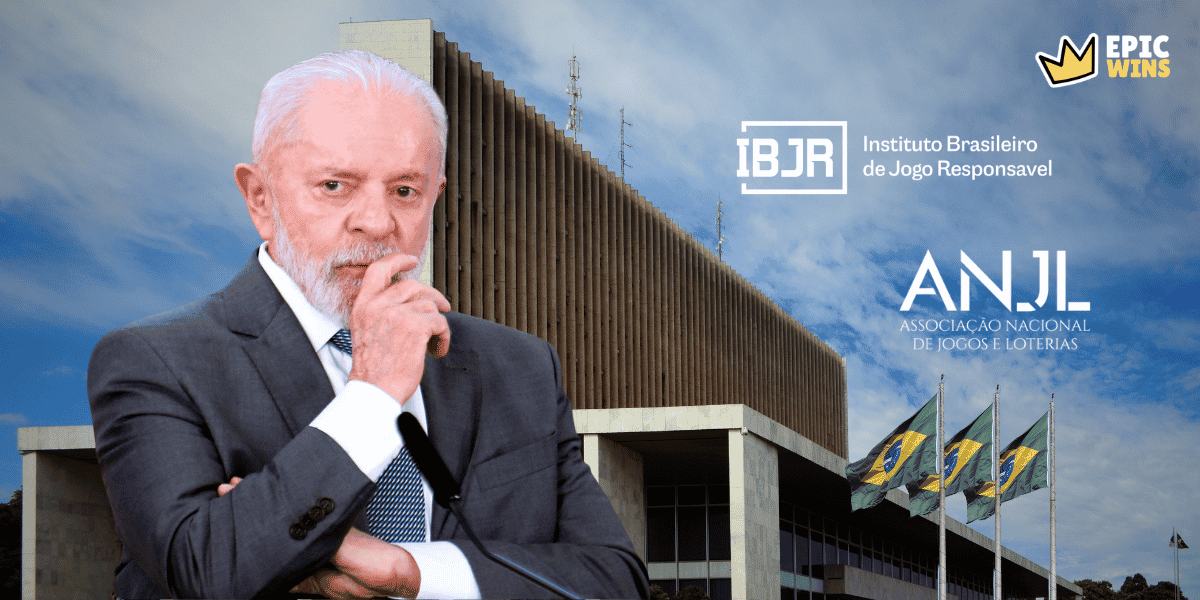
The National Association of Games and Lotteries (ANJL) and the Brazilian Institute of Responsible Gaming (IBJR) filed their requests on 28 September against Provisional Measure (MP) 1,394, which Lula signed on 25 September. The measure prohibits the exploitation, offering, intermediation and advertising of fixed-odds betting nationwide, a category that under Brazilian law also covers online casino games.

Players have until 5 October to withdraw their balances. From 6 October, betting websites and apps are due to become unavailable. The MP took effect on publication, and Congress must approve it within 120 days for it to stay in force.
The case before Justice Fux
Justice Luiz Fux is handling the case and hasn’t granted an injunction. The Attorney General’s Office (AGU) asked for 72 hours to prepare the government’s response, saying it needs to consult the regulatory agencies involved.
The associations are challenging both the content of the ban and the way it was introduced. They argue the government didn’t show the urgency that Article 62 of the Constitution requires for a provisional measure, and didn’t assess the ban’s effects before issuing it.
They want the court to stop the cancellation of authorisations, the interruption of payments and the blocking of platforms while the dispute runs. They also argue the ban leaves the state exposed to refund claims from licence holders.
Brazil has 85 authorised betting companies, and each paid R$30 million for its authorisation, around R$2.5 billion in total. The authorisations are valid for five years. The regulated market only became fully operational on 1 January 2025, so the ban comes less than two years into that term.
Lula’s case for the ban
The ban comes from the same government that built the regulated regime under Law 14,790/2023. Lula has tied the measure to household debt and compared betting to a disease, according to CartaCapital:
“It’s like cancer. Either you remove the tumour, or the tumour will kill us.” (translated from Portuguese)
Lula first called for a ban on online betting platforms in April, and his Workers’ Party (PT) tabled a bill to prohibit fixed-odds betting the same month. The MP moves faster than a bill that would end online betting within 180 days, reported in August: it gives licensed operators 11 days from signature to shutdown.
Operators count the cost
Flutter Entertainment, which operates in Brazil through Betnacional, estimates the ban could cut its 2026 revenue by about $70 million and adjusted EBITDA by about $20 million, according to a filing with the US Securities and Exchange Commission (SEC). Brazil accounted for about 1% of Flutter’s revenue in 2025. The company said it is reviewing its options.
Entain had expected Brazil to contribute around 5% of its online net gaming revenue (NGR) this year. If the ban stays in place, it now expects underlying EBITDA to finish toward the bottom of its £910 million to £960 million guidance range. Entain said Brazil’s contribution to earnings had been expected to be relatively modest.
Betano is preparing its own legal action to protect the rights attached to its Brazilian licence, issued on 1 January 2025 for five years. Brazil is Betano’s largest single market. Its case rests on licence and investment rights, separate from the associations’ constitutional challenge.
Allwyn, which owns 36.75% of Betano’s parent Kaizen Gaming, hasn’t said what relief Betano will seek, and no compensation claim has been confirmed. Allwyn has withdrawn previous guidance of an adjusted EBITDA margin of around 37%, saying it no longer applies if the ban lasts through year-end. Because Kaizen is an equity-accounted investment, Allwyn still expects a limited direct effect on its consolidated results.
Clubs skip government talks
The ban also hits Brazilian football. A meeting set for 29 September between the federal government, state federations and clubs from all four national divisions was cancelled after clubs coordinated to limit attendance. Folha de S.Paulo reported that executives from Palmeiras and Flamengo led the effort.
The government said the gap between invitation and meeting was too short and flights were limited, and that a later date would allow more clubs to attend. No new date has been set. A working group has been discussed as an alternative forum.
The meeting was due to cover ways to reduce the ban’s impact on clubs, including debt restructuring. Many clubs don’t accept that as a substitute for sponsorship: sponsorship brings in cash now, while restructuring only changes the terms of debt they already owe.
Betting companies paid Série A clubs around R$1.03 billion in sponsorship in 2025, up from R$618 million in 2024. That equals 7.2% of the R$14.3 billion in revenue that top-division clubs generated in 2025.
What happens next
The next decision point is Justice Fux’s ruling once the AGU files its response. In Congress, the MP needs approval within 120 days or it lapses. Betano’s case hasn’t been filed yet, and the government hasn’t set a date to resume talks with clubs.
Unless the STF, Congress or the government changes course, the blocking of betting sites and apps starts on 6 October, the day after the withdrawal window for players closes.
Source: Government of Brazil, Flutter Entertainment, Entain, Allwyn