


Table of Contents
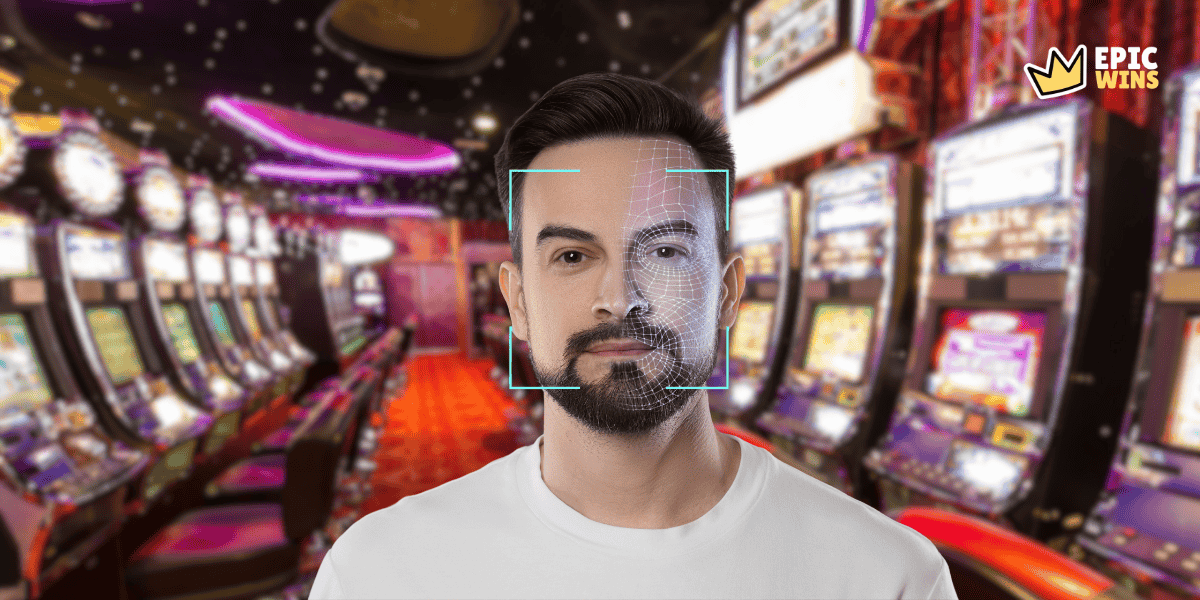
Las Vegas casinos are rolling out facial recognition software at a growing number of properties, with industry and academic voices split on how well the technology performs in a casino setting.
Why Casinos Are Turning to Facial Recognition
The scale of casino surveillance makes human monitoring alone impractical. A single property can operate hundreds of cameras across gaming floors, hotel corridors, and back-of-house areas — far too many for security staff to track effectively in real time.

Mehmet Erdem, a hospitality professor at the University of Nevada, Las Vegas, said the software is deployed more frequently in environments where large sums of money change hands. He added that the technology goes beyond identity matching: systems can read behavioural cues, including a player’s apparent mood, and trigger alerts before a situation escalates. If someone appears to be about to start a fight or produces a weapon, an automated alert to security could prevent a more serious incident.
One company active in this space is Xailient Inc., which drew attention last year after announcing plans to embed facial recognition directly into slot machines. The company said the integration would allow real-time tracking of targeted players and improve overall operational efficiency on the casino floor.
The broader adoption reflects a sharp drop in the cost of the technology and improvements in processing speed, making large-scale deployment viable for properties of varying sizes, not just the largest Strip operators.
What the Experts Say About Accuracy
George Bebis, director of the Computer Vision Laboratory at the University of Nevada, Reno, acknowledged the technology’s potential but was direct about its limitations in casino environments. Casino surveillance footage is typically low-resolution and captured under uneven lighting conditions — factors that reduce the reliability of any automated match.
Bebis said a human must remain part of the verification process. When a system flags an individual, a forensic specialist in facial recognition — not a security guard or a responding officer — should conduct the confirmation step. Without that layer of expert review, the risk of acting on a false positive increases significantly.
That risk is not theoretical. In 2023, a truck driver was arrested after the facial recognition system at the Peppermill Casino in Reno, Nevada, returned a match identifying him as a person previously banned from the property. The match was incorrect.
Erdem took a different view on the error rate. He argued that human judgment is itself unreliable, pointing to cases where juries have wrongly convicted individuals based on eyewitness accounts. In his assessment, automated systems, despite producing false positives, are less prone to error overall than unaided human identification.
Regulatory and Operational Questions Ahead
The Nevada Gaming Control Board has not issued specific guidance on facial recognition standards for licensed properties. That regulatory gap leaves individual operators to set their own protocols — including how matches are verified and how long biometric data is retained.
As Nevada casinos posted a record $15.8bn in gaming revenue in 2025, investment in security infrastructure has kept pace with growth. Whether facial recognition becomes a regulated requirement or remains an operator-level decision will depend partly on how the technology’s accuracy record develops in real-world casino conditions, and partly on whether a high-profile misidentification case forces the issue into the regulatory agenda.
Source: Gambling News