








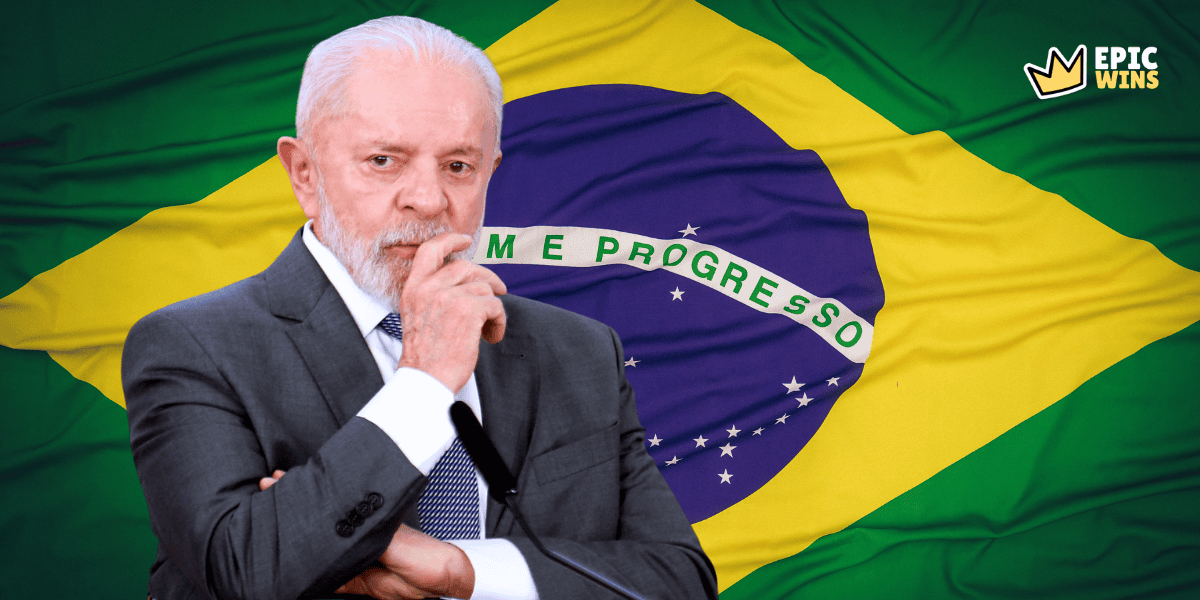
Brazil’s licensed online gambling operators entered a new fiscal phase this month as the 13% gross gaming revenue tax rate under Complementary Law No. 224 formally came into force following the 90-day constitutional waiting period from the law’s publication in December 2025. The rate increase marks the first step in a three-year escalation that will take operators to 15% by 2028, while several additional fiscal proposals remain unresolved heading into an election year.
From 12% to 15% — The Path Set by Law No. 224
President Luiz Inácio Lula da Silva signed Complementary Law No. 224/2025 into law on December 26, 2025, following approval by both the Senate and Chamber of Deputies earlier that month. The legislation raises the GGR tax rate on fixed-odds betting licensees from 12% to 13% in 2026, 14% in 2027, and 15% from 2028 onwards. Brazil’s constitution subjects certain new or increased taxes — including the CSLL, PIS, Cofins, and social security contributions — to a 90-day waiting period before enforcement, which deferred the 13% rate’s entry into force until April 2026.
The law also expands operators’ social obligations. From 2026, licensed operators must direct 1% of collected revenue to the social security system, rising to 2% in 2027 and 3% in 2028. An additional provision introduces joint tax liability for entities that advertise or provide financial services to unauthorised betting platforms, a measure intended to reduce the operating capacity of the illegal market.
The eventual 15% ceiling represents a significant political compromise. Early proposals in 2025 ranged from doubling the rate outright to 24% — an initiative backed by Finance Minister Fernando Haddad — to a Senate committee-approved version at 18%. The final legislation landed at 15% following protracted negotiations that produced several failed votes across the latter half of 2025 before a workable bill reached the President’s desk.
Revenue From the First Year
The fiscal case for continued taxation is substantial. Brazil’s federal government collected BRL 9.95 billion ($2.0 billion) in taxes from betting companies across 2025, the first year of the regulated market, with industry estimates putting total contributions above BRL 10.7 billion when including payments not directly administered by the Federal Revenue Service. Regulated operators generated BRL 37 billion ($7.4 billion) in revenue during the year, excluding player winnings.
A study by LCA Consultoria commissioned by the Brazilian Institute of Responsible Gaming (IBJR) found the current fiscal structure already absorbs roughly one-third of operators’ gross revenue. The study projects the effective tax burden on licensed operators will rise from 32% in 2025 to 42% by 2033 as Brazil’s broader VAT reform is implemented, with sports betting potentially facing a 38.5% effective rate under baseline projections. In January 2026 alone, the Receita Federal collected R$1.5 billion from lotteries, gambling, and betting — a figure inflated by the base effect of near-zero collections in January 2025 when the market had just launched.
CIDE-Bets — Removed but Not Dead
The GGR rate increase is not the only fiscal pressure facing licensed operators. The CIDE-Bets deposit levy, a proposal to impose a 15% surcharge on fixed-odds betting at the point of deposit, was stripped from the Anti-Racketeering Bill (PL 5,582/2025) by the Chamber of Deputies in February 2026. The removal offered temporary relief but did not close the proposal politically.
Supporters within the governing coalition had argued CIDE-Bets would generate up to R$30 billion (approximately €5 billion) annually for the National Public Security Fund, framing it as the primary mechanism to fund prison reform following a 2023 Supreme Court ruling that declared Brazil’s incarceration conditions unconstitutional. The government’s position on the levy remains a live question, with backers in the PT signalling continued intent to pursue the measure through other legislative vehicles.
Industry bodies have consistently warned that a deposit tax would collapse channelisation. The IBJR stated in December 2025: “By taxing the bettor’s deposit at 15%, the state decrees that BRL 100 is only worth BRL 85 in companies that follow the law. In the black market, however, the same BRL 100 is worth the full amount. This is a direct incentive to migrate to the illegal market.” Udo Seckelmann, head of gambling and crypto at Brazilian law firm Bichara e Motta Advogados, warned separately that if CIDE-Bets were enacted, channelisation to licensed platforms could drop below 20%. The CIDE-Bets saga continues to shadow the regulated market’s second year of operation.
Constitutional Amendment Moves to Senate
A parallel measure advanced in March. The Chamber of Deputies unanimously approved a constitutional amendment — the Public Security PEC — that would redirect a portion of existing gambling tax proceeds to the National Public Security Fund and National Penitentiary Fund. The PEC does not increase the tax burden on licensed operators; it restructures how existing revenues are distributed among government programmes.
Under the current framework set by Law 14.790/2023, betting tax proceeds flow to the Ministry of Sport (36%), Ministry of Tourism (22.4%), FNSP (13.6%), Education (10%), Social Security (10%), Brazilian Sports Entities (7.3%), and the Ministry of Health (0.7%). The amendment proposes a three-year phase-in during which 10% of revenues — rising to a ceiling of 30% — would be redirected to the FNSP and FunPen between 2026 and 2028, with the allocation calculated after deducting player winnings, income tax on those winnings, and operator gross profits. The proposal now proceeds to the Federal Senate.
Political Pressure Into the Election Cycle
All of this is developing against an electoral backdrop: Brazil holds its general election on 4 October 2026. The Lula administration’s public posture toward the Bets market has shifted sharply over the past year. In March 2026, Lula used a national broadcast to call for a ban on online casinos and “Fortune Tiger” games — a notable reversal from the president who signed the regulatory framework legalising them in 2023. Lula’s call to ban online casinos signalled the degree to which political attitudes toward the sector have hardened since launch.
Haddad, one of the architects of the Bets Law, departed the Finance Ministry in March to pursue the São Paulo governorship, having publicly described the betting sector as predatory. The outstanding regulatory agenda — a federal self-exclusion register, a dedicated advertising bill, and the unresolved status of CIDE-Bets — leaves the second year of Brazil’s regulated market in a state of considerable fiscal and political uncertainty. André Gelfi, Director General of the IBJR, argued in December 2025 that the government should focus on reducing the illegal market before pursuing further increases. “Only once the illegal market is significantly reduced can Brazil discuss higher taxation without putting the regulated system at a disadvantage,” he said.
For operators already navigating a market that generated $7 billion in GGR in its first year, the April 2026 tax step-up is the most concrete development so far — but it is unlikely to be the last.
Source: SBC News