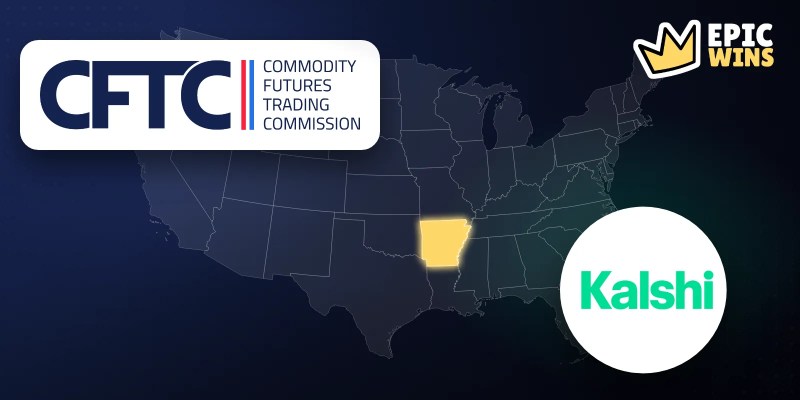

The Commodity Futures Trading Commission (CFTC) has sent the White House two rules that would write event contracts into the federal definition of a swap. If adopted, they would place prediction markets under CFTC oversight and narrow the room state gambling regulators have to act against platforms such as Kalshi and Polymarket.
Both measures went to the Office of Information and Regulatory Affairs (OIRA), part of the Office of Management and Budget (OMB), on 28 September 2026, according to the federal regulatory review filings first reported by Bloomberg. The full texts have not been published. OIRA has classed neither rule as economically significant.
Two rules on two timelines
The proposed swap definition
The first is a proposed rule (RIN 3038-AF82). It would explicitly define “swap” under the Commodity Exchange Act to include event contracts. As a proposal, it has to go out for public comment before the CFTC can finalise it.
The casino-style carve-out
The second is an interim final rule (RIN 3038-AF81). It would exclude “casino-style gambling products” from the swap definition. An interim final rule can take effect when it is published in the Federal Register, with comments taken afterwards, so this part could apply as soon as it clears review.
The carve-out draws a line between event contracts the CFTC wants to supervise and products that look like casino games, which would stay outside federal swap rules. The filings do not say how the agency defines “casino-style”. That definition will set how much ground the states keep.
One commissioner holds the vote
Michael Selig, the CFTC chairman, is currently the commission’s only sitting member. Once OIRA completes its review, his vote alone can release the proposed rule for comment and publish the interim rule.
Selig has argued that event contracts listed on CFTC-registered exchanges fall under exclusive federal jurisdiction. The two rules would put that position into regulation.
Why the swap label matters
Swaps traded on CFTC-designated contract markets are regulated under federal commodities law. Kalshi and Polymarket argue that this status pre-empts state gambling law, which is how they offer sports contracts in states where they hold no gambling licence and pay no state betting tax.
Federal appeals courts have reached conflicting decisions on whether sports event contracts qualify as swaps, and the split has reached the Supreme Court. A CFTC rule that names event contracts as swaps would give the agency, and the platforms it regulates, a formal text to cite in that litigation.
The CFTC has continued to clear new entrants while the cases run. Novig’s valuation reportedly reached $2bn after its CFTC approval, and Rothera is among the newer platforms in the market.
States keep suing
New York has sued Polymarket seeking a statewide ban, following earlier legal action against Kalshi. Gambling regulators in other states have filed their own suits arguing that sports event contracts are unlicensed gambling.
The state cases rest on the claim that a sports contract is a bet regardless of where it is listed. The CFTC rules, if adopted, would answer that claim at federal level for every product outside the casino-style exclusion.
Enforcement alongside the rulemaking
The CFTC is also investigating former Representative Adam Kinzinger over Kalshi wagers tied to his own pardon, according to reports.
Separately, CFTC staff issued an advisory on “mention markets”, contracts that settle on whether a named person says a particular word. Staff warned these contracts are “readily susceptible to manipulation”. The advisory shows the agency setting limits on which contracts it will tolerate while it seeks wider authority over the sector.
What happens next
Under Executive Order 12866, OIRA has up to 90 days to review a rule, and that period can be extended. After clearance, Selig would vote on publication. The interim rule would apply on publication in the Federal Register. The proposed rule would open a comment period, giving state regulators, tribal gaming operators and licensed sportsbooks a formal channel to object.
For licensed US operators, the result decides whether prediction platforms can keep offering sports contracts across the country without state licences, state tax or state responsible gambling obligations. The rulemaking and the Supreme Court case are now running in parallel, and either could settle the jurisdiction question first.
Source: Commodity Futures Trading Commission