

Key points
- Brazil’s Ministry of Sport and the Federal Police signed a Technical Cooperation Agreement on match-fixing on 16 November 2026.
- The agreement runs for 60 months, or five years.
- The ministry’s sports betting secretariat screens suspected manipulation first and refers possible crimes to the Federal Police.
- The deal covers data sharing, joint procedures, staff training and education for athletes and referees.
- It comes while Provisional Measure 1.394/2026 bans fixed-odds betting in Brazil.
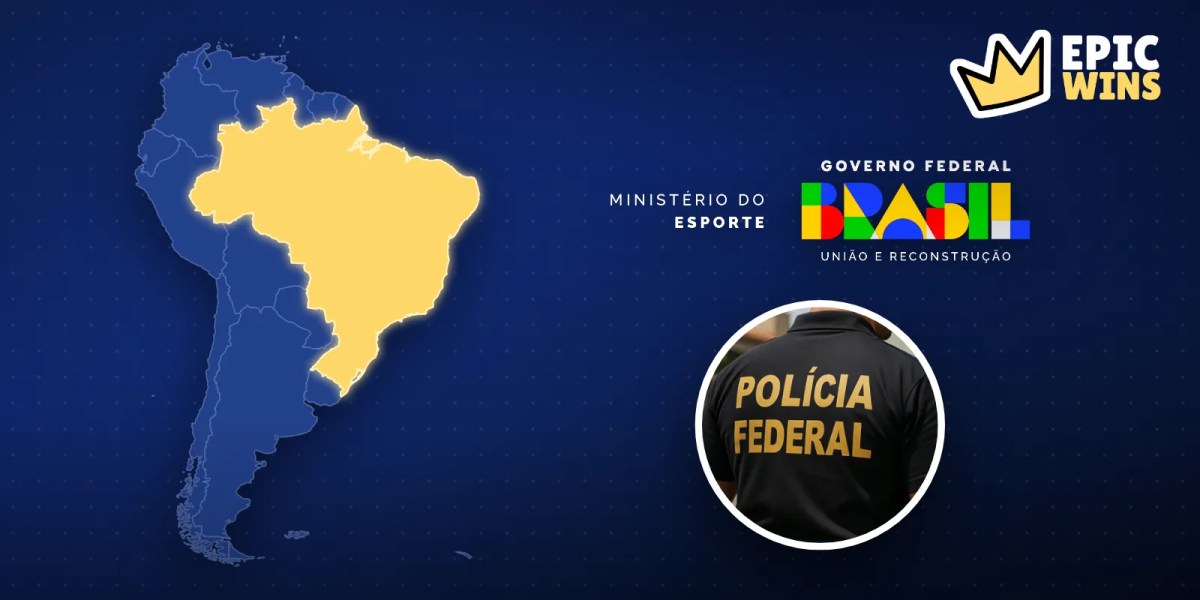
Brazil’s Ministry of Sport and the Federal Police signed a five-year match-fixing agreement, formally a Technical Cooperation Agreement, on 16 November 2026 to prevent and investigate result manipulation and other fraud in competitions held in Brazil. Sports Minister Paulo Henrique Cordeiro and Federal Police Director-General Andrei Rodrigues signed the deal, which runs for 60 months.
What the match-fixing agreement covers in Brazil
The two bodies will set joint procedures for handling information on suspected result manipulation, exchange data, studies, reports and technical assessments, and open permanent channels of communication, according to Máquina do Esporte’s report on the signing.
The National Secretariat for Sports Betting and Economic Development of Sport (Snaede), part of the Ministry of Sport, receives reports of possible manipulation and makes the first assessment. Cases that show signs of a crime go to the Federal Police for investigation.
The agreement also includes training and knowledge exchange between the two institutions’ teams, plus awareness work aimed at athletes, referees, club executives, coaches and other people in sport.
What the signatories said
Rodrigues said the agreement came at the right time, according to Máquina do Esporte.
“This is a very timely moment. We are going to speed up the processes.”
Andrei Rodrigues, Director-General, Federal Police (translated from Portuguese)
Cordeiro summed up the split in roles: prevention sits with the ministry, and “the PF goes there” when a case needs police action, he said (translated from Portuguese). Giovanni Rocco Neto, the National Secretary for Sports Betting and Economic Development of Sport, also spoke.
“Our commitment is to protect the credibility of competitions.”
Giovanni Rocco Neto, National Secretary for Sports Betting and Economic Development of Sport, Ministry of Sport (translated from Portuguese)
Integrity work under the betting ban
The agreement arrives while Brazil’s fixed-odds market is closed. Provisional Measure 1.394/2026, signed by President Luiz Inácio Lula da Silva, took effect on 25 September and ended federal betting authorisations on 25 October, as covered in the Brazil betting ban licence deadline report.
The Federal Police already have a dedicated unit. A Ministry of Justice and Public Security ordinance published on 13 October created the Division for the Repression of Illegal Betting and Sports Manipulation (DRAME), reported in Brazil betting ban amendments and police unit. The International Betting Integrity Association (IBIA) has warned that a ban could move customers to offshore operators whose accounts and records are harder to trace.
Next steps
The agreement stays in force until November 2031. The measure’s effects run to 4 March unless Congress converts it into law, according to Máquina do Esporte. More coverage sits on the Latin America news hub.