





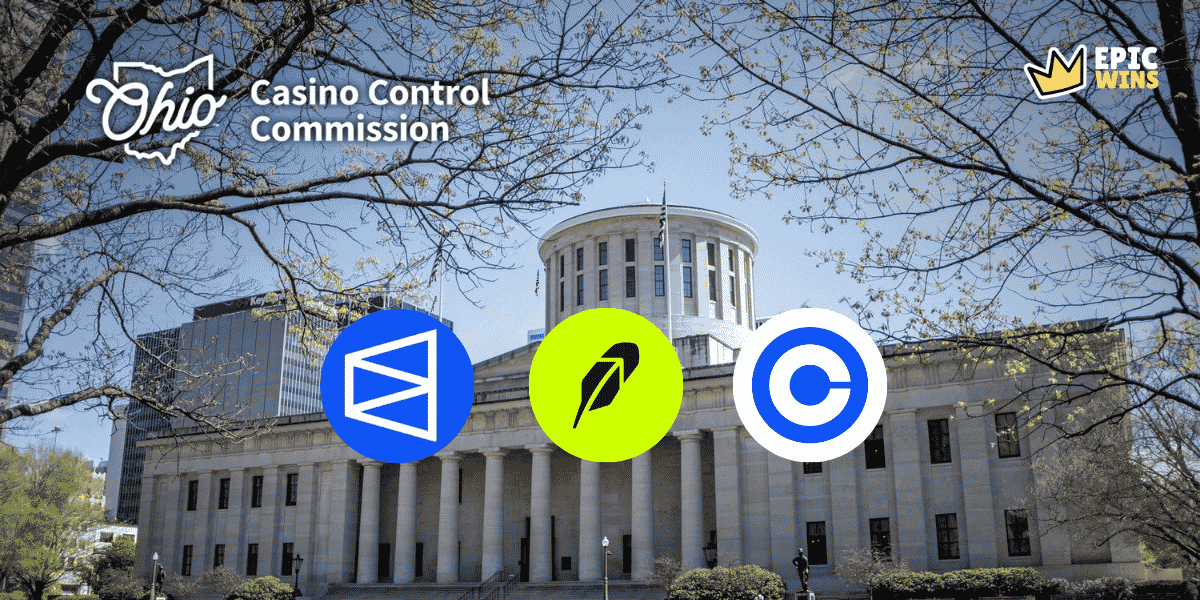
The Ohio Casino Control Commission (OCCC) has ordered 10 prediction market operators to stop offering sports event contracts to people in Ohio. The cease-and-desist notices, issued on 7 October, give the companies until 16 October to comply.
The 10 recipients are Underdog, Gemini Titan, Coinbase, ProphetX, Novig, Robinhood Derivatives, Polymarket’s US entity, Plus500US Financial Services, Moomoo Financial and Webull Financial. Operators that keep offering the contracts after the deadline face administrative, civil, nuisance or criminal action, according to the OCCC.
The Sixth Circuit ruling behind the letters
The OCCC cited the 25 September decision of the Sixth US Circuit Court of Appeals in KalshiEx LLC v. Schuler. A unanimous panel, in an opinion written by Judge Julia Smith Gibbons, held that the Commodity Exchange Act (CEA) does not preempt state enforcement of sports gambling laws against sports event contracts.
The panel also rejected Kalshi’s argument that its sports contracts are swaps under the CEA. Gibbons wrote that the contracts have only downstream economic consequences, which falls short of the statute’s test. Robinhood has made the same swaps argument in its own disputes with state regulators.
The appeal combined Kalshi’s cases against Ohio and Tennessee. The court affirmed a lower court’s refusal to grant Kalshi a preliminary injunction against Ohio, and vacated a Tennessee district court order that had blocked that state from enforcing its laws.
The notices are Ohio’s largest action against prediction markets by number of companies. Andromeda Morrison, the OCCC’s interim executive director, said:
“The Commission expects these entities to cease their illegal gambling activity in Ohio immediately.”
Kalshi left off the list
Kalshi, the company whose case produced the ruling, did not receive a notice. The OCCC excluded it because its litigation with the state is still ongoing.
Ohio first moved against prediction markets in March 2025, when it sent cease-and-desist letters to Kalshi, Robinhood and Crypto.com and gave them two weeks to confirm compliance. Crypto.com is not among the 10 companies named this week. The 2025 letters came as Nevada and New Jersey took similar action, and before Kalshi went to court against several state regulators.
Ohio regulates sports betting through licensed operators under state law. The OCCC’s position since 2025 has been that a contract on the outcome of a game meets the state’s definition of sports gaming, and so requires a state licence.
Federal courts split on preemption
Two other appeals courts have ruled on the same question. The Ninth Circuit sided with Nevada in August 2026. The Third Circuit went the other way in New Jersey’s case and accepted Kalshi’s argument that federal commodities regulation controls. An appeal in the Fourth Circuit is still pending, and a federal judge in Illinois recently ruled in Kalshi’s favour.
New Jersey has petitioned the US Supreme Court, and Crypto.com and Robinhood have urged the court to take up the question. Legal commentators expect the widening split to make a Supreme Court hearing more likely.
The federal regulator is also pressing its own case. The Commodity Futures Trading Commission (CFTC) has sent two rules to the White House to assert its authority over prediction markets.
Who is exposed
The list mixes crypto exchanges, retail brokerages and sports-focused platforms. Coinbase, Gemini Titan, Robinhood, Webull, Moomoo and Plus500US reach customers through trading apps. Underdog, ProphetX and Novig built their businesses around sports.
Novig, which reportedly raised at a $2 billion valuation after gaining CFTC approval, runs its sports prediction market in 47 states, Ohio among them.
What happens next
The 10 companies have nine days to geofence Ohio, challenge the notices, or test the OCCC’s willingness to enforce. A court challenge would have to go through the Sixth Circuit, where the law now favours the state.
The same ruling cleared Tennessee to enforce its own sports wagering laws. Kalshi’s next steps in its own Ohio case, and whether the Supreme Court agrees to hear New Jersey’s petition, will decide how long the state-by-state enforcement continues.
Source: Ohio Casino Control Commission


