



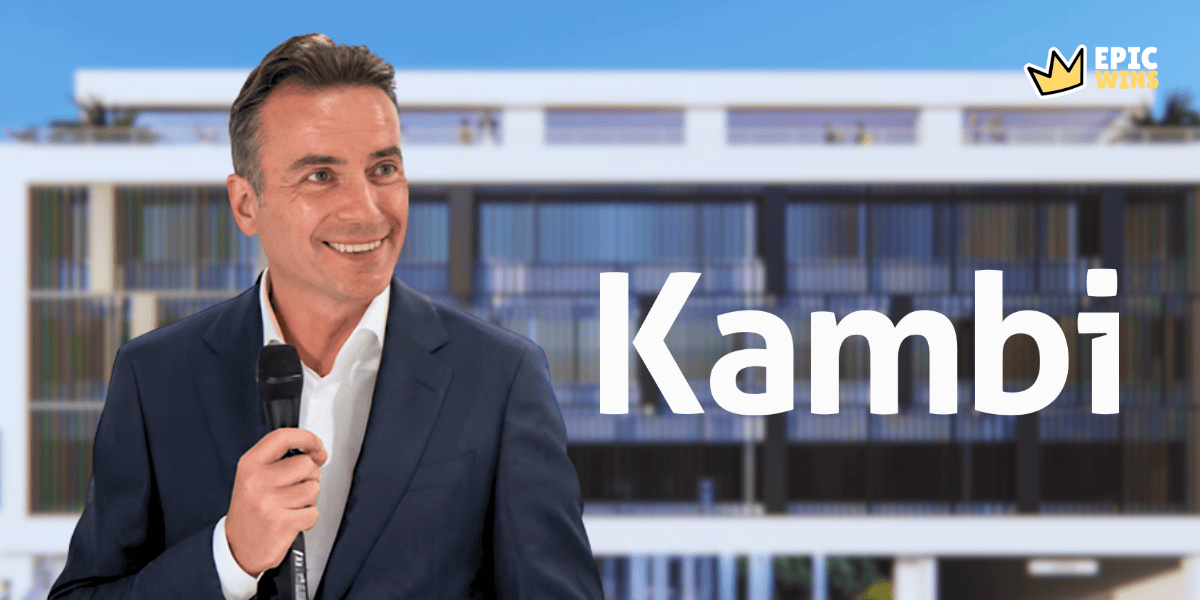
Kambi Group posted full-year 2025 revenue of €162.0m and adjusted EBITA (acq) of €17.6m in its 2025 Annual Report, published today. Revenue fell 8.2% year-on-year, though the decline shrinks to 1.2% when excluding transition fees received in 2024 that did not recur.
The top-line drop landed against a year of structural progress. AI-driven trading accounted for 48% of all bets processed on the Kambi platform in 2025, with CEO Werner Becher targeting full automation of the company’s 2026 FIFA World Cup trading operation for the first time.
“For us AI isn’t a buzzword, it’s a capability already deeply embedded into our product, our workflows, and increasingly also our results.” — Werner Becher, CEO, Kambi Group
Q4 and Full-Year Financials
Fourth-quarter revenue came in at €42.7m, down 3.9% on the €44.5m recorded in Q4 2024. Q4 adjusted EBITA (acq) reached €7.4m excluding FX revaluations, a 16% increase on €6.3m in the same period a year earlier. The operator trading margin held at 11.2% for Q4 and 10.8% for the full year. Full-year cash flow was €21.2m. Kambi returned €25.8m to shareholders via share buybacks during the year, with year-end cash at €32.9m.
Full-year adjusted EBITA of €17.6m came in below the €25.4m recorded in 2024. CFO David Kenyon attributed the compression primarily to a broad rise in gaming-related taxes across multiple markets, FX headwinds, and the Brazil ramp developing more slowly than anticipated.
Brazil, OLG, and the Partner Pipeline
Kambi launched in Brazil on day one of regulation, live with partners including Stake, BetMGM, BetWarrior, KTO and Rei do Pitaco. The market grew more slowly than forecast, weighing on the full-year result. Becher had flagged in Q3 that Brazil was the most significant of the three factors behind the guidance revision made at that time.
The Ontario Lottery and Gaming (OLG) partnership, replacing FDJ United on a contract running until 2032, went live in Q1 2026 after integration work completed in 2025. OLG’s retail network spans approximately 10,000 points of sale. The slip from a targeted late-2025 launch reduced recognised 2025 revenue by a single-digit million amount.
New Turnkey Sportsbook signings during the year included LCKY Group and OLG. Odds Feed+ partnerships continued to expand, with Superbet Group among the new deals signed. Revenue concentration among Kambi’s three largest partners fell from 45% in 2023 to 39% in 2024, with the company expecting further dilution as new partners reach full-year contribution in 2026. The pressures Kambi describes mirror those reported by Evolution in its Q4 2025 results, where European regulatory and tax headwinds also compressed margins year-on-year.
Nevada Licence and PAM
Kambi secured a gaming licence in Nevada during 2025 and acquired PAM source code from OMEGA Systems to support a Turnkey Sportsbook launch in the state. A field-testing agreement at Bally’s Lake Tahoe is in place, with a targeted H1 2026 launch. Becher confirmed the PAM will not be offered as a standalone product. Its purpose is to unlock sportsbook opportunities in markets where viable third-party PAMs are unavailable.
Nevada adds to a US footprint that already covers more than 20 licensed jurisdictions. Kambi is also live with OLG in Ontario, a market that generated C$4bn in iGaming revenue in 2025.
2026 Outlook
Kambi guided 2026 adjusted EBITA (acq) of €20m to €25m, a material step up from the 2025 outturn. Management indicated the result is expected towards the upper end of the range if Colombia does not introduce a new betting tax. The company is targeting €9m in annual cash savings through efficiency programmes.
The 2026 FIFA World Cup, with its expanded bracket and higher match count, is expected to contribute an additional €5m in revenue, with Kambi’s automated trading systems running the full operation for the first time.
Source: Kambi Group