
Table of Contents
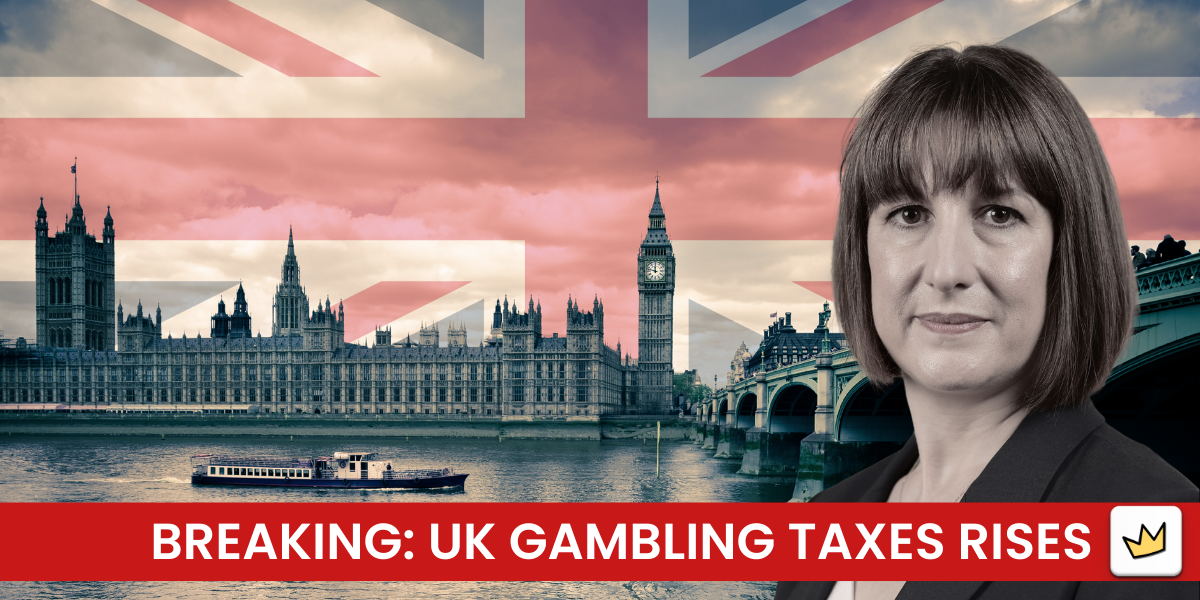
The UK government has unveiled significant gambling tax increases as part of Chancellor Rachel Reeves’ Autumn Budget 2025, with online operators facing substantially higher duty rates that will take effect over the next two years.
According to documents released by the Office for Budget Responsibility, the Treasury will implement a phased approach to gambling tax reform, targeting online gaming and remote betting while largely preserving the current structure for horseracing.
Online Casino Tax Set for Substantial Increase
From April 2026, the Remote Gaming Duty applied to online casino operations will increase from its current 21% rate. While the exact percentage has not been officially confirmed in the leaked OBR documents, multiple industry sources and taxation experts predict the rate will rise to approximately 40%, nearly doubling the current levy.
This increase represents one of the most significant shifts in UK gambling taxation in recent years, bringing British online casino rates closer to those charged in other European markets such as Austria (40%) and the Netherlands (34.2%).
The Remote Gaming Duty applies to all profits generated from online casino games, including slots, table games, and other games of chance offered to UK customers, regardless of where the operator is based.
Sports Betting to Face 25% Rate from 2027
The OBR documents confirm that a new rate of General Betting Duty for remote (online) sports betting will be introduced at 25% from April 2027, up from the current 15% rate. This represents a 10 percentage point increase for online sportsbook operations.
The reforms will exclude self-service betting terminals, spread betting, pool bets, and crucially, horseracing wagers from the higher rate. This exemption for horseracing betting follows months of intensive lobbying by the British Horseracing Authority and related stakeholders.
In-person sports betting at retail bookmakers is expected to remain at the current 15% rate, creating a differential between online and land-based wagering for the first time in UK gambling taxation.
Bingo Duty to be Abolished
As part of the broader restructuring, the government will abolish Bingo Duty entirely from its current 10% rate starting in April 2026, providing relief to one segment of the gambling industry while increasing levies elsewhere.
Implementation Timeline and Revenue Targets
The gambling tax reforms will be implemented in two phases:
April 2026: Remote Gaming Duty increases and Bingo Duty abolition take effect
April 2027: New 25% General Betting Duty rate for online sports betting becomes operational
The OBR forecasts these measures will generate approximately £1.1 billion in additional annual revenue for the Treasury, significantly less than the £3.2 billion projected by some think tanks but still representing a substantial contribution to public finances.
Major Operator Reactions and Warnings
Leading UK gambling operators have responded to the anticipated tax increases with stark warnings about potential consequences for employment, retail operations, and regulatory compliance.
Entain, which operates Ladbrokes and Coral, saw its CEO Stella David caution that increased taxation beyond certain thresholds leads to black market growth. David pointed to the Netherlands as a cautionary example, where tax increases in January 2025 led to admitted regulatory setbacks.
“We shouldn’t forget, we’re a great British company who generates a huge amount of tax for the government,” David said during Entain’s H1 2025 earnings call. “I think people should be very cautious about the law of unintended consequences. There is already a large black market in the UK and driving up tax rates has the potential of reducing the tax take because people go to the black market.”
Flutter Entertainment, owner of Paddy Power and Sky Bet, has already taken preemptive action by relocating its Sky Bet headquarters from London to Malta, a move estimated to save the company £55 million in UK tax payments.
Betfred founder Fred Done warned that if tax rates reached 35-40%, the company would be forced to close all 1,287 of its retail betting shops, resulting in approximately 7,500 job losses. “If [the tax rate] went up to anywhere like 40%, or even 35%, there is no profit in the business,” Done told the BBC.
William Hill, owned by Evoke, has already announced it could close up to 200 betting shops affecting 1,500 jobs as a result of the anticipated tax increases.
Industry Analysis: Financial Impact on Operators
Research commissioned by the Betting and Gaming Council from Ernst & Young warns that the proposed tax increases could eliminate approximately 40,000 jobs across the sector and divert up to £8.4 billion in wagers to unregulated black market operators.
The consultancy’s projections show a £3.1 billion reduction in the UK’s gross value added from the betting and gaming sector if the higher tax rates are implemented.
However, these figures have been disputed by taxation reform advocates who argue that the industry’s warnings represent lobbying tactics rather than economic analysis. The Treasury Select Committee published a report on November 7 urging the government “not to cave in to industry scaremongering” and calling for higher taxes on “the most addictive products.”
Market Performance and Strategic Responses
UK gambling company share prices have experienced significant volatility throughout the tax debate period. Over the past three months, Evoke’s share price has fallen 42%, Rank Group by 21%, and Entain by 29%, reflecting investor concerns about margin compression and competitive pressures.
Several operators have begun implementing cost reduction measures and strategic repositioning ahead of the tax increases:
- Flutter has relocated key operations to Malta to optimize tax structures
- William Hill has closed operations in several international jurisdictions
- Multiple operators have reduced marketing expenditures and reviewed operational costs
Rank Group CEO John O’Reilly noted during the company’s trading update that the group generated £44.6 million in profit after tax while paying £188 million in taxes and duties, highlighting the already substantial tax contribution from gambling operators.
Regulatory Context and International Comparisons
The UK gambling tax reform comes amid broader European regulatory tightening. Several markets have implemented similar or higher tax rates:
- Netherlands: 34.2% on online gaming (increased January 2025)
- Austria: 40% on remote gaming
- France: 54.9% on online sportsbook income
- Sweden: 22% on online gaming
However, several of these markets have experienced challenges with channelization rates and black market growth following tax increases, particularly in the Netherlands where regulators have acknowledged difficulties with the recent changes.
The UK Gambling Commission currently regulates approximately 300 licensed operators serving British customers, with online gambling gross gaming yield reaching £1.49 billion in Q2 2025, representing 16% year-on-year growth.
Treasury Rationale and Policy Objectives
The Treasury’s decision to increase gambling taxes stems from multiple policy objectives, including raising revenue to address a fiscal shortfall estimated at tens of billions of pounds, addressing social harms associated with gambling addiction, and aligning UK tax rates more closely with international comparators.
Former Prime Minister Gordon Brown has been among the most vocal supporters of gambling tax increases, arguing that the revenue should be used to abolish the two-child benefit cap and reduce child poverty. The OBR documents confirm that the government will indeed scrap the two-child benefit limit, affecting 560,000 families at a cost of approximately £3.5 billion annually.
Chancellor Reeves has stated there is “a case” for gambling companies to pay more taxes, particularly given the sector’s growth and profitability over the past decade.
Looking Ahead: Implementation Challenges
The phased implementation approach provides operators with time to adjust business models and operational structures, though many industry executives argue that the timeframe is insufficient given the magnitude of the changes.
Key challenges facing operators include:
- Maintaining profitability while absorbing significant duty increases
- Competing against unregulated offshore operators not subject to UK taxation
- Balancing retail and online operations with differential tax treatment
- Managing investor expectations amid compressed margins
- Ensuring adequate funding for responsible gambling initiatives
CMS tax co-head Stephen Hignett noted that the Treasury “has a way to go” to understand the nuances and complexities of the gambling industry, suggesting that implementation may require ongoing dialogue between regulators and operators.
The gambling tax reforms represent one of the most significant changes to UK betting and gaming fiscal policy since the 2005 Gambling Act modernization, with implications that will reshape the competitive landscape and potentially influence where operators choose to base their operations in the years ahead.
Source: UK Government / Office for Budget Responsibility